You’ve started the same habit four times this year. Exercise. Reading. Writing. Waking up earlier. It works for a week. Then life happens. And you’re back to square one wondering what’s wrong with you.
Nothing is wrong with you. The system is wrong.
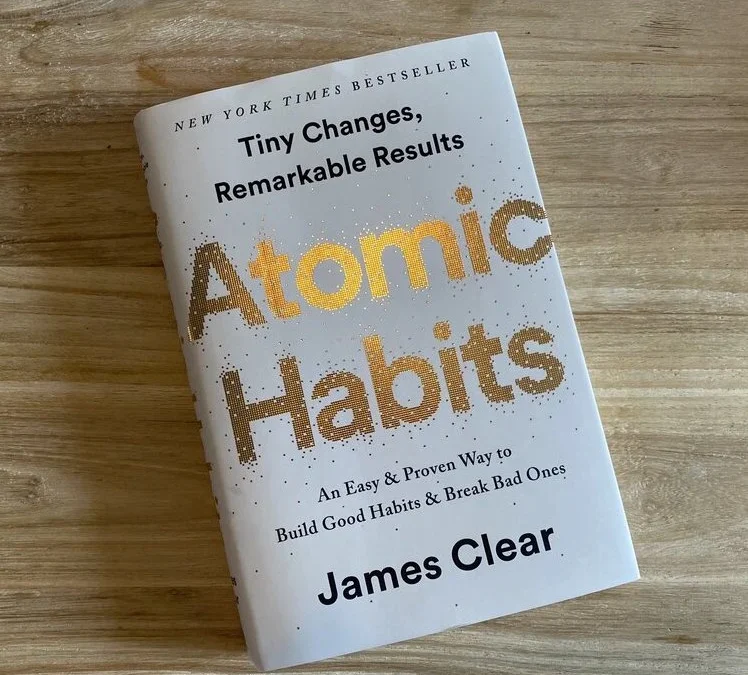
That’s the core argument in James Clear’s Atomic Habits — one of the most-read books of the last decade and, honestly, one of the most practical. This Atomic Habits summary breaks down what the book actually says, where people go wrong applying it, and what I think after sitting with these ideas for years.
What is Atomic Habits about — and who is it really for?
Think about the last habit you tried to build. You were motivated. You had a plan. Maybe you even told people about it. And for a while, it worked. Then one missed day turned into two, which turned into “I’ll restart on Monday,” which turned into never.
That cycle isn’t a willpower problem. It’s a design problem. You were relying on motivation to carry you through — and motivation is unreliable. Clear’s book is about building habits that don’t need motivation because the environment makes them almost automatic.
This book is for anyone who has ever tried to change their behaviour and failed. Which is most of us. Whether you’re a founder trying to build a writing habit, a student trying to study more consistently, or a professional trying to exercise regularly — the system in this book works for all of it.
Who is James Clear — and why does his opinion matter?
James Clear is a writer and entrepreneur who built one of the largest newsletters in the world — over 3 million subscribers — before Atomic Habits was even published. He spent years studying the science of habits, testing ideas on himself, and writing about what actually worked. His approach is grounded in behavioural psychology and neuroscience, but he explains it the way a good coach would — without jargon, without fluff. Atomic Habits sold over 20 million copies not because it was trendy, but because the ideas inside it are genuinely useful and immediately applicable.
The big idea in Atomic Habits — said plainly
Atomic Habits argues that lasting change doesn’t come from big dramatic actions — it comes from small improvements repeated consistently. A 1% improvement every day compounds into dramatic results over time. The secret isn’t motivation or discipline. It’s designing systems that make good habits easy and bad habits hard.
Here’s a way to think about it. Imagine two rivers. One flows fast because the terrain naturally slopes downward. The other requires constant effort to push water uphill. Most people try to build habits by pushing water uphill — grinding through willpower. Clear’s system is about reshaping the terrain so the right behaviour flows naturally downhill.
The shift is from “try harder” to “design better.” And once you see it that way, you can’t unsee it.
Why Atomic Habits hits different in 2026
Clear wrote this in 2018. But the problem it addresses has only gotten worse. We now live in an environment that is professionally engineered to make bad habits effortless. Every app on your phone is optimised by teams of engineers whose full-time job is to make you open it more. Every notification is designed to pull you away from whatever you were trying to do. The default behaviour — without any intentional design — is distraction, procrastination, and drift.
At the same time, AI is reshaping what professional value looks like. The people who will thrive are those who can consistently produce original thinking, build skills over time, and stay focused when everything around them is pulling toward the shallow end. Those outcomes don’t come from occasional bursts of effort. They come from habits — specifically, from the kind of small consistent actions this book describes.
Building one good habit might feel modest. But stacked across months and years, the compounding effect is the difference between where most people end up and where the top 5% end up. That gap isn’t talent. It’s system design.
The ideas inside Atomic Habits — broken down simply
You don’t rise to your goals — you fall to your systems
What it means: Goals tell you where you want to go. Systems are what actually get you there. Clear argues that most people over-invest in setting goals and under-invest in building the systems that make those goals inevitable. The goal is an outcome. The system is the process that produces it.
Why it matters more than it sounds: Two people can share the exact same goal and get completely different results — because their systems are different. Focusing on the system shifts your energy from wishing to building. And systems are something you can actually control and improve.
A real example: A junior developer who wants to get promoted focuses on the goal — the title, the salary, the recognition. A developer who actually gets promoted focuses on the system — a daily practice of reading technical documentation, shipping small improvements, and asking for feedback. Same goal. Very different daily behaviour.
Identity is the engine behind every habit that actually sticks
What it means: Most people try to change behaviour by focusing on outcomes (“I want to lose weight”) or processes (“I’ll go to the gym three times a week”). Clear argues there’s a deeper level: identity. The most durable habits come from a shift in how you see yourself. “I’m trying to get fit” is fragile. “I’m someone who exercises” is load-bearing.
Why it matters more than it sounds: Every action you take is a vote for the kind of person you’re becoming. Miss the gym once — one vote against. Show up even for 10 minutes — one vote for. The habit isn’t the point. The identity is. And identity changes through accumulated evidence, not through declarations.
A real example: A content creator who says “I’m trying to write more” will stop when inspiration runs dry. One who says “I’m a writer — I write every day” treats the blank page as a job, not a mood. The second identity makes missing a day feel wrong, not just inconvenient.
Every habit runs on a four-step loop — and you can hack all four
What it means: Clear’s framework says every habit — good or bad — follows the same loop: cue (a trigger that starts the behaviour) → craving (the motivation or desire) → response (the actual behaviour) → reward (the benefit you get). To build a good habit, make it obvious, attractive, easy, and satisfying. To break a bad one, invert each step.
Why it matters more than it sounds: Most people try to fight the response (the behaviour itself) using willpower. Clear’s system works upstream — changing the cue so the behaviour never gets triggered, or the reward so the brain stops wanting it. Working at the root is far more efficient than fighting the symptom.
A real example: A student trying to reduce phone use at night doesn’t need more discipline. They need to change the cue: leave the phone in another room before bed. No cue, no craving, no response. The habit loop breaks before it starts.
Environment design is more powerful than motivation — every single time
What it means: Your behaviour is shaped heavily by what’s around you. If healthy food is at eye level in your fridge, you eat more of it. If your running shoes are by the door, you run more. If your phone is on your desk, you check it more. Clear calls this “choice architecture” — designing your environment so the right choice is also the easiest choice.
Why it matters more than it sounds: Motivation is temporary. Environment is always there. Relying on willpower means fighting your surroundings every single day. Redesigning your environment means your surroundings work for you instead of against you. One is exhausting. The other is almost effortless.
A real example: A founder who wants to write more doesn’t need to “find motivation.” They need to open a blank document at the start of every morning before they open email. The open document is the cue. The absence of other distractions is the environment. The habit follows naturally.
The two-minute rule — start so small it feels almost pointless
What it means: When starting a new habit, scale it down to something that takes two minutes or less. Want to read more? Read one page. Want to meditate? Sit quietly for two minutes. Want to exercise? Put on your gym clothes. The goal isn’t to do the full thing. It’s to show up — to make starting the automatic part.
Why it matters more than it sounds: The biggest barrier to any habit is starting. Once you’re in motion, continuing is easy. The two-minute rule removes the activation energy — that resistance you feel before starting — by making the entry point so small it feels ridiculous not to do it.
A real example: A busy professional who “doesn’t have time to exercise” finds it easy to dismiss a 45-minute workout. Much harder to dismiss “just put on my gym shoes.” And once the shoes are on, the workout usually happens. The shoes weren’t the workout — they were the door.
How to actually use Atomic Habits in your life
If you’re a founder or entrepreneur
- Audit your current work environment. What cues are triggering the habits that waste your time? Move them. Literally. Phone in a drawer, social media apps off your home screen, inbox closed until a scheduled time.
- Pick one keystone habit — one behaviour that, if done consistently, makes everything else easier. For most founders it’s the morning writing or thinking block. Protect it with the same urgency as a board meeting.
- Stack new habits onto existing anchors. “After I make my first coffee, I’ll spend 10 minutes reviewing my priorities for the day.” The existing habit carries the new one until it stands on its own.
If you’re a creator or writer
- Stop waiting for inspiration. Apply the two-minute rule — open the document, write one sentence, and let momentum do the rest. Inspiration follows action far more reliably than it precedes it.
- Design your creative environment deliberately. Same seat, same time, same pre-work ritual. These aren’t superstitions — they’re cues that tell your brain “it’s time to create.” Consistency in environment builds consistency in output.
- Track your streak visually. Clear calls this “don’t break the chain.” A simple calendar where you mark each day you showed up creates a psychological pull to keep the streak alive. Miss one day — fine. Never miss two.
If you’re a student or early-career professional
- Use implementation intentions — not “I’ll study more” but “I’ll study at my desk from 6–8pm every weeknight.” Specificity makes follow-through dramatically more likely. Vague intentions fail. Scheduled ones stick.
- Make the habit you want to build the path of least resistance. Want to read before bed? Put the book on your pillow. Want to practise a skill daily? Leave the tool open on your laptop every evening before you close it.
- Focus on showing up, not on being perfect. A 20-minute mediocre study session counts. A “perfect” session you keep postponing doesn’t. Consistency compounds. Perfection paralyses.
Where people go wrong with Atomic Habits
Mistake 1 — treating small habits as too small to matter
People read about the 1% improvement concept, nod enthusiastically, then dismiss their tiny daily habits as insignificant. “Reading one page won’t make me a reader.” “Walking for 10 minutes won’t make me fit.” So they never start.
Why it happens: Humans are bad at intuiting compound growth. We expect linear results. When a small habit doesn’t produce visible results in a week, we assume it’s not working — rather than understanding we’re still in the early flat part of the curve.
What to do instead: Track the habit, not the outcome. The result of one page read is invisible. The result of reading one page every day for a year — about 15 books — is not. Measure consistency, not impact. The impact follows later.
Mistake 2 — changing too many habits at once
Inspired after finishing the book, people overhaul their entire life. New morning routine, new diet, new exercise plan, new evening wind-down — all starting Monday. By Wednesday, one falls. By Friday, they all have.
Why it happens: Willpower and decision-making capacity are finite daily resources. Trying to change multiple behaviours simultaneously depletes both. Each new habit requires cognitive effort until it becomes automatic — stack too many and none of them get there.
What to do instead: Pick one habit. Make it so small it’s embarrassing. Do it every day for 30 days. Then add the next one. Building habits sequentially, not simultaneously, is how they actually stick.
Mistake 3 — focusing on the outcome instead of the identity
People set up their habits entirely around goals — lose 5kg, write a book, build a business — and measure every day against that endpoint. When progress feels slow, motivation collapses.
Why it happens: Outcome-based thinking makes every day feel like a failure until the goal is reached. That’s an exhausting way to live and an unreliable source of motivation over months or years.
What to do instead: Shift the question from “did I get closer to my goal today?” to “did I act like the person I’m becoming today?” One vote for the identity. That’s the whole job. Do it enough times and the outcome arrives on its own.
Mistake 4 — skipping the environment redesign
People read about environment design, think “that makes sense,” and change nothing about their physical or digital environment. Then they wonder why the habit doesn’t hold.
Why it happens: Changing the environment requires actual physical effort — moving things, deleting apps, rearranging your desk. It’s easier to assume you’ll just “try harder.” But trying harder against an unchanged environment is a losing battle every time.
What to do instead: Before you start any new habit, spend 15 minutes redesigning your environment to make that habit the easiest available option. Move the obstacle. Add the cue. Remove the friction. Then start.
The lessons from Atomic Habits that actually stick
01 — You don’t need more motivation. You need a better system.
Motivation is unreliable — it peaks when you start and fades exactly when you need it most. A well-designed system runs whether you feel motivated or not. That’s the whole point of building one.
02 — Small habits feel insignificant and are anything but.
A 1% daily improvement compounds to 37x better over a year. A 1% daily decline compounds to nearly zero. The size of the habit is irrelevant. The consistency is everything.
03 — Every action you take is a vote for who you’re becoming.
This reframe is quietly profound. You’re not trying to build a habit — you’re trying to become a person. The habit is just the evidence. Cast enough votes in one direction and the identity follows.
04 — Your environment shapes your behaviour more than your intentions do.
The most disciplined people aren’t the ones with the most willpower — they’re the ones who’ve designed their environment so willpower is rarely needed. Set up your world to make the right choice easy.
05 — Never miss twice. One missed day is human. Two is the start of a new habit.
Missing once doesn’t break a habit. Missing twice starts to. The rule isn’t perfection — it’s recovery speed. Get back the next day, every time, and the streak survives what life throws at it.
Lines from Atomic Habits worth keeping
“You do not rise to the level of your goals. You fall to the level of your systems.”
— James Clear, Atomic Habits
The single most quotable line in the book — and the one that reframes everything. Goals are wishes. Systems are the mechanism.
“Every action you take is a vote for the type of person you wish to become.”
— James Clear, Atomic Habits
Turns every small decision into something meaningful. You’re not just doing a habit — you’re building a person.
“The most effective form of motivation is progress.”
— James Clear, Atomic Habits
Stop waiting to feel motivated before starting. Start, make progress, and let the progress create the motivation.
Key idea: You don’t need to be the most talented person in the room. You need to be the most consistent one. Talent sets the ceiling. Habits determine how close you get to it.
This reframes the entire debate about talent vs effort. Clear isn’t dismissing talent — he’s pointing out that most people never get close to their ceiling because their habits keep them far from it.
Who should actually read Atomic Habits?
Anyone who has tried to change a habit and failed — If you’ve restarted the same goal more than twice, the problem isn’t you — it’s your approach. This book fixes the approach.
Founders and entrepreneurs building new routines — If your most important work keeps getting crowded out by urgent tasks, this book will show you how to protect it systematically — not through willpower but through design.
Students trying to build consistent study habits — If you study in bursts and then crash, this book gives you a framework for building a daily practice that holds even when motivation doesn’t.
Professionals who want to build skills over time — If you know what you want to get better at but can never seem to make time for it, this book will show you it’s not a time problem — it’s a system problem.
What I personally took from Atomic Habits
I expected a book about discipline. What I found was a book about architecture. Clear isn’t really telling you to try harder — he’s telling you to stop trying harder and start designing smarter. That shift felt almost like permission. Permission to stop blaming yourself for failed habits and start looking at the system you built them on. For a book about self-improvement, it’s surprisingly gentle about human nature.
Where I’d push back: Clear’s framework is brilliant for individual habits. Where I think it gets thinner is in the context of high-pressure professional environments — where your environment isn’t fully yours to redesign, your calendar is owned by other people, and the cues triggering bad habits come from organisational culture, not your fridge arrangement. If you’re a solo creator or entrepreneur, this book applies almost perfectly. If you’re in a large organisation, you’ll need to do some translation work — because not every environment can be redesigned by one person acting alone.
The one thing I’m taking away: the identity reframe. I used to think about my habits as things I was trying to do. Now I think about them as things that reflect who I am. It’s a subtle shift that changes everything about how I respond when I miss a day — instead of feeling like I’ve failed a goal, I think about what the next vote needs to be. It made consistency feel less like discipline and more like self-respect.
Here’s the question I’d leave you with: if your daily habits were the only evidence anyone had about who you are — what would they conclude? And is that the person you’re trying to become?
Quick answers about Atomic Habits
Atomic Habits is 320 pages and takes most readers 4–6 hours to finish. It reads quickly because Clear writes in short, clear sections with lots of practical examples. Many people read it in two or three sittings. The reading time is the easy part — the real time investment is in applying what you read, which starts with picking one habit and testing it the same day you finish.
The main message is that lasting change doesn’t come from motivation or willpower — it comes from building systems that make good habits automatic and bad habits inconvenient. Small improvements, done consistently, compound into remarkable results over time. The goal isn’t to do something big once. It’s to do something small every day until it becomes who you are.
Yes — and it’s worth reading slowly. Most people race through it and immediately try to apply everything at once. The better approach is to read one section, pick one idea, and implement it before moving on. The book is most valuable when treated as a workbook, not a story. It’s one of the few self-help books where the ROI is directly proportional to how seriously you take the small steps.